

Mihai Eminescu, born Mihail Eminovici, is considered the most important Romanian poet. A poet, prose writer and journalist, he was the strongest voice of Romanian Romanticism, and his work laid the foundations of the modern Romanian literary language.
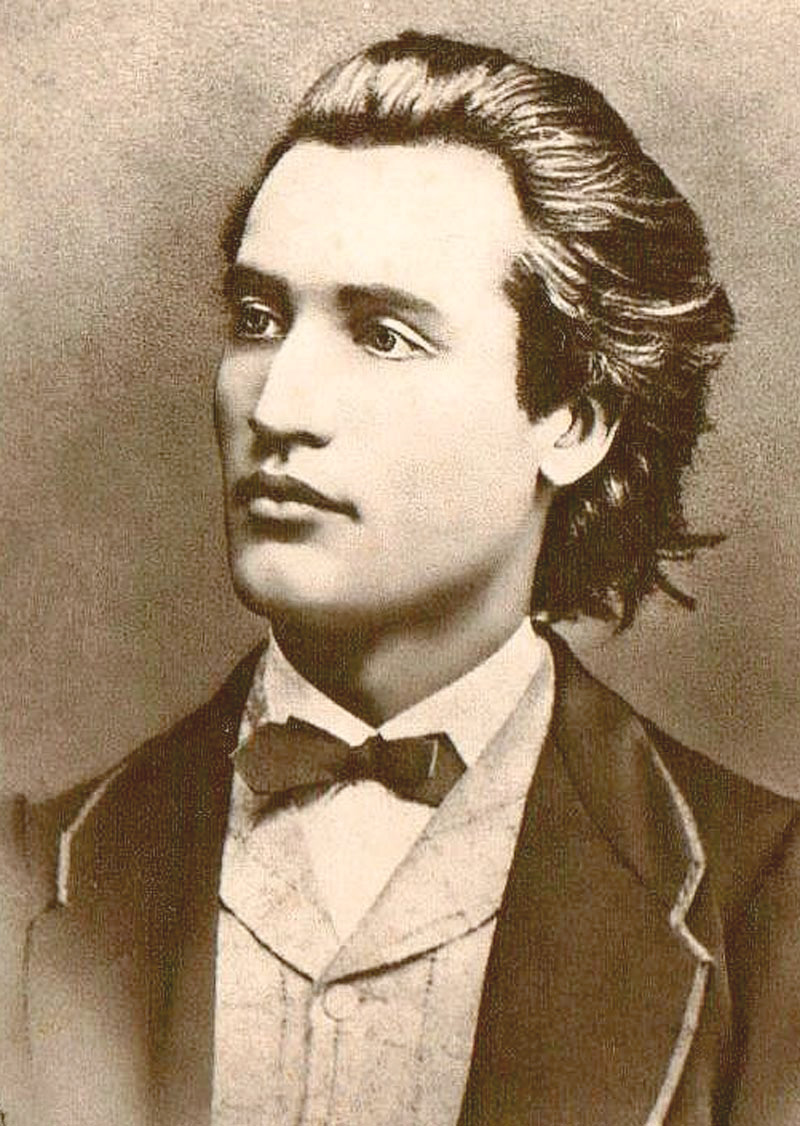
Public domain – Wikimedia Commons
Key moments in his life
- 15 January 1850 – born in Botoșani, the seventh of the 11 children of Gheorghe Eminovici and Raluca (née Jurașcu). He spends his childhood in Ipotești.
- 1858–1866 – attends school in Cernăuți, where Aron Pumnul is his teacher.
- 1866 – makes his debut in Iosif Vulcan’s magazine Familia, who changes his name to “Eminescu”.
- 1866–1869 – travels with the theatre troupes of Tardini and Pascaly as prompter and copyist.
- 1869–1874 – studies in Vienna and Berlin (philosophy, law, history). From 1870 he publishes in Convorbiri literare and becomes a member of the Junimea society.
- 1874–1877 – in Iași: director of the Central Library and school inspector. Close friendship with Ion Creangă and love for Veronica Micle.
- 1877–1883 – in Bucharest, editor and then editor-in-chief of the newspaper Timpul.
- 1883 – falls gravely ill. In December the volume Poesii appears, edited by Titu Maiorescu.
- 15 June 1889 – dies in Bucharest and is buried at Bellu Cemetery.
- 1902 – his manuscripts (46 volumes, about 14,000 pages) are donated to the Romanian Academy by Titu Maiorescu.
Major works
Poetry: Luceafărul (1883), Scrisorile I–V (1881), Floare albastră, Glossă, Odă (în metru antic), Mai am un singur dor, Doina, Sara pe deal, Lacul, Dorința.
Prose: Sărmanul Dionis (1872), Cezara, Geniu pustiu (novel published posthumously).
Legacy
The poet’s birthday, 15 January, is celebrated in Romania as National Culture Day. Numerous schools, streets and statues around the world bear his name. Asteroid 9495 Eminescu and a crater on the planet Mercury were named in his honour.